Empathy
Empathy in project management is the ability to understand and respond to the perspectives, emotions, and needs of team members and stakeholders throughout the project lifecycle. It plays a critical role in fostering trust, improving communication, and creating a collaborative work environment where individuals feel valued and heard. Drawing from Daniel Goleman’s theory of emotional intelligence, empathy is identified as a key leadership competency that enables effective relationship management and team performance. By actively listening and considering different viewpoints, project managers can better anticipate challenges, resolve conflicts, and support team success. Ultimately, empathetic leadership enhances collaboration and contributes to more successful project outcomes (Goleman, 1995).
Empathy in Leadership
Empathy is a critical leadership competency that strengthens my ability to connect with and effectively guide individuals in a variety of situations. It allows me to better understand the perspectives, motivations, and challenges of those I lead, which improves communication and builds trust across the team. By practicing empathy, I am able to respond to issues with greater awareness and create an environment where people feel supported and valued. This approach also helps me navigate conflict more effectively by considering multiple viewpoints before making decisions. As a leader, empathy enables me to foster stronger relationships while still maintaining accountability and driving results
Importance of Empathy
It was important for professors to include empathy as a competency within the Organizational Leadership degree because effective leadership is built on understanding and connecting with people. Organizations are made up of individuals with different perspectives, experiences, and challenges, and leaders must be able to recognize and respond to those differences in a productive way. Developing empathy prepares students to communicate more effectively, build trust, and create stronger team relationships in professional settings. It also helps future leaders navigate conflict, support employee growth, and make decisions that consider both organizational goals and the well-being of others. Including this competency ensures that graduates are prepared to lead with both emotional awareness and practical effectiveness.
Enterprise
During my time at ASU, I have experienced significant growth in developing empathy as a leadership competency. Early on, I tended to focus more on task completion and outcomes, but my coursework and experiences helped me recognize the importance of understanding the people behind the work. Through group projects, discussions, and leadership concepts, I became more intentional about listening, considering different perspectives, and responding with greater awareness. This growth has improved my ability to communicate effectively, build stronger relationships, and handle challenges with a more balanced approach. Overall, my development in empathy has made me a more well-rounded leader who can support both organizational goals and the individuals contributing to them.
Sources:
Goleman, D. (1995). Emotional intelligence: Why it can matter more than IQ. Bantam Books.
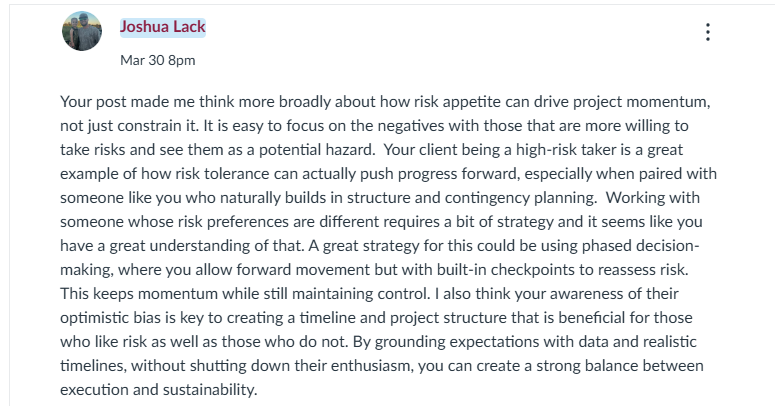
My artifact for empathy is demonstrated through my responses to discussion posts, where I engaged thoughtfully with classmates from a variety of backgrounds and perspectives. These interactions required me to actively listen, reflect on others’ viewpoints, and respond in a way that was both respectful and meaningful. Through this process, I learned how to communicate with greater emotional awareness and adapt my tone to foster positive and productive conversations. Engaging in these discussions strengthened my ability to acknowledge different experiences while still contributing my own insights. Overall, this artifact reflects my growth in showing empathy and building connections through effective and considerate communication.